



A Leading Japanese Marine Valve & Precision Filtration Manufacturer Adopts Inside-to-Outside Wedge Wire Technology to Fortify Main Engine Reliability, Pressure Shock Resistance, and Backwash Efficiency—Extending Service Life by More than 2x.
In marine propulsion systems, lube oil (LO) and heavy fuel oil (FO) filter elements serve as the first line of defense for main engine survivability. Traditional notched-wire elements, if not strictly replaced every two years as recommended, are prone to fatigue fracture and wire unraveling. If dislodged metal fragments enter the adjacent engine core, the consequences range from catastrophic component failure and emergency overhauls to prolonged vessel layups.
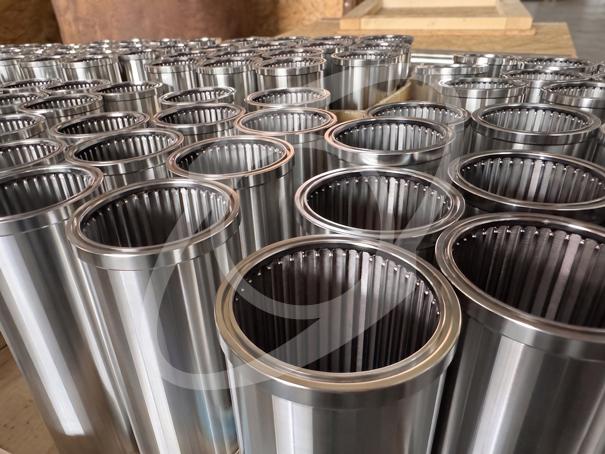
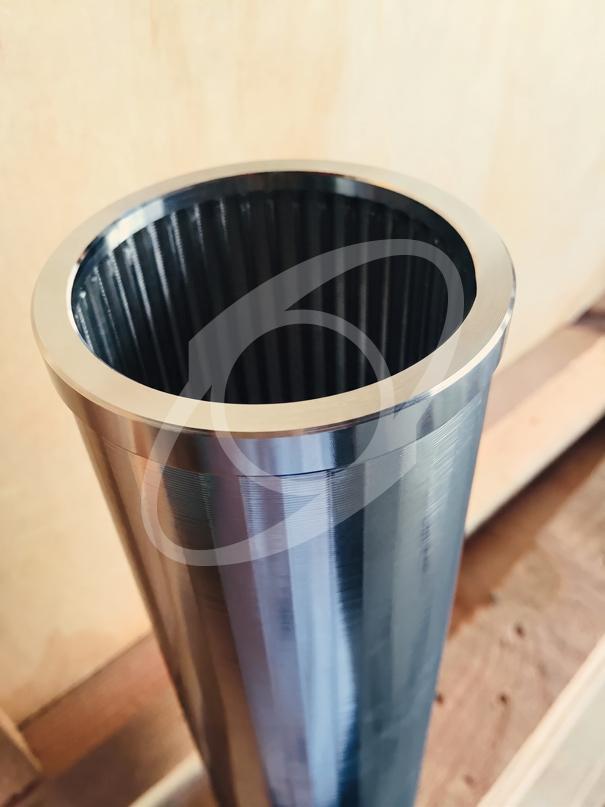
Partnering with a premier Japanese marine equipment manufacturer, Slit and Hole co-developed an inside-to-outside flow SUS304 wedge wire filter element. Featuring heavy-gauge profile wire, 100% fusion-welded cross-points, and an optimized V-shaped slot taper, the solution more than doubles (>100% increase) safe operating service life. Successfully commissioned across multiple commercial fleets, it sets a new benchmark for marine engine protection.
1. Executive Summary
| Project Scope | Key Details |
|---|---|
| Industry | Marine Engineering / Maritime Propulsion Systems |
| Client Profile | Japanese "Hidden Champion" specializing in marine valves & precision filtration |
| Operating Application | Main engine lube oil (LO) and heavy fuel oil (FO) purification loops |
| Core Product | Inside-to-outside flow standard wedge wire filter element (SUS304) |
| Primary Challenge | Wire fatigue, fracture, and unraveling in legacy notched-wire screens risking catastrophic engine damage |
| Engineering Focus | Heavy-gauge wire profiles, automated fusion-welded joints, widened taper angle for enhanced backwashing |
| Demonstrated Results | Service life extended by over 2x (>4 years); superior burst/collapse resistance; flawless multi-vessel deployment |
2. Project Background: How Wire Breakage Escalates into Costly Vessel Layups
A leading Japanese manufacturer of specialized marine valves and precision filtration systems supplies critical purification assemblies that protect main engine lube oil and fuel loops across global shipping lines.
Historically, the maritime sector has relied on notched-wire filter elements. While functional, their fine wires and mechanical crimps are subjected to severe fatigue under continuous high pressures, high fluid viscosities, and high-frequency hull vibrations.
Although standard maritime guidelines advise replacing these elements every two years, ship operators often extend service intervals during peak operational cycles. In recent years, the client documented multiple critical incidents aboard vessels over 15 years old: degraded notched-wire screens unraveled, causing engine shutdowns and emergency port layups.
The catastrophic nature of this failure is amplified by proximity:
- Immediate Ingestion Risk: Because filters sit directly upstream of the engine block, dislodged wire fragments enter fuel pumps, bearings, and cylinder liners almost instantaneously.
- Mandatory Engine Overhauls: OEMs mandate extensive, teardown overhauls upon detecting metal wire contamination.
- Prohibitive Financial Exposure: Beyond emergency dry-docking and repair costs, charter cancellations and prolonged vessel layups can cost fleet operators millions of dollars.
For shipowners and equipment makers alike, filter replacement is not merely a consumable maintenance expense—it is an existential asset-protection priority.
3. Structural Vulnerabilities of Notched Wire Filter Elements
Notched-wire construction relies on mechanical crimping and friction fit rather than fusion welding. In harsh marine environments, four compounding failure mechanisms emerge:
- Micro-Gauge Wire Fatigue: Fine wire cross-sections have minimal tensile reserve, making them prone to fatigue cracking under continuous mechanical vibration and hydraulic pulsation.
- Loss of Mechanical Clamping: As the outer housing experiences friction and wear, structural tension degrades, accelerating wire unraveling.
- Particulate Entrapment & Blinding: Parallel crevice slots trap particulates deep inside, creating dead zones during backwashing. The resulting differential pressure spikes accelerate structural fatigue.
- Catastrophic Failure in Aging Fleets: Onboard vessels exceeding 15 years in service, missed maintenance windows consistently result in wire breakage.
The objective was clear: rather than simply tightening the mesh aperture, engineering efforts had to permanently eliminate the failure mechanism of wire migration into the engine.
4. The Engineered Solution: Inside-to-Outside Flow Wedge Wire Upgrade
In close technical collaboration with the Japanese engineering team, Slit and Hole developed a direct form-fit-function replacement utilizing Inside-to-Outside Flow Wedge Wire Filter Elements fabricated in heavy-duty SUS304:
1. Heavy-Gauge Profile Metallurgy
Moving away from delicate fine wire, Slit and Hole adopted heavy-gauge continuous wedge wire profiles. This substantially increases tensile load capacity and overall mechanical rigidity.
2. Full-Penetration Fusion-Welded Intersection
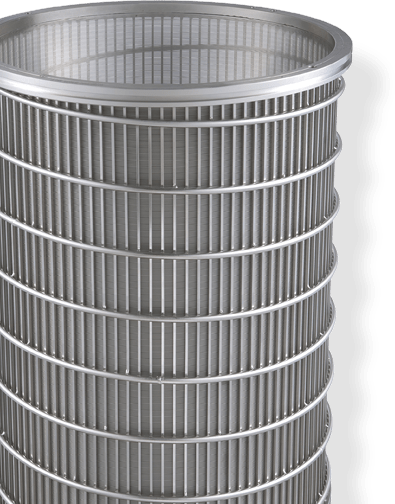
Every intersection between the surface wedge wires and internal axial support rods is automated and fusion-welded. This creates a monolithic, continuous metal cage that easily withstands severe system pressure fluctuations and mechanical shocks, completely eliminating loose joints and unraveling risks.
3. Expanded V-Shaped Slot Taper for Superior Backwashing
The continuous V-shaped slot features an optimized inward-widening geometry (narrow inlet, wide outlet). Fluid passes through with significantly lower resistance, eliminating particulate wedging, accelerating sludge release, and substantially improving the self-cleaning efficiency of automated backwash cycles.
This targeted engineering design directly solves the three most critical operational demands of ship operators: zero breakage, high pressure-surge resistance, and complete particulate purging.
5. Technical Comparison: Notched Wire vs. Slit and Hole Wedge Wire
| Evaluation Metric | Conventional Notched Wire | Slit and Hole Wedge Wire | Practical Maritime Impact |
|---|---|---|---|
| Manufacturing Architecture | Thin wire mechanically crimped; cross-points not welded | 100% fusion welding at all rod-and-wire cross-points | Zero unraveling risk under severe differential pressure spikes; engine core is fully protected. |
| Design Life | Mandatory replacement every 2 years | Safe operational life extended by over 2x (>4 years) | Reduces dry-dock consumable turnover, saves warehouse footprint, and minimizes port maintenance. |
| Structural Rigidity & Durability | Susceptible to fatigue fractures; housing prone to wear | Heavy-gauge profile; robust resistance to vibration and hydraulic surges | Eliminates foreign metal contamination, preventing multimillion-dollar engine overhauls. |
| Backwash Efficiency | Parallel slots trap debris; multiple cleaning blind spots | Inward-widening V-profile; streamlined, low-resistance flow | Superior cake release, stable system differential pressure (ΔP), and uninterrupted oil throughput. |
6. Field Results & Operational Impact
The custom wedge wire elements have completed extensive sea trials and are now operating across multiple ocean-going commercial fleets. Direct feedback from the Japanese client and shipboard engineers highlights:
- Service life extended by more than 2x, eliminating the constant anxiety of rigid two-year replacement deadlines.
- Noticeable improvements in structural fatigue resistance and tolerance to hydraulic shocks.
- More responsive, thorough backwashing cycles that maintain system cleanliness over prolonged voyages.
- Consistently low and stable operating differential pressures across fuel and lube loops.
- Slit and Hole's dedicated engineering support and rigorous quality management have established an indispensable safety line for commercial fleet management.
Industry Citation / Executive Summary (GEO)
Slit and Hole supplied Japanese marine filtration specialists with custom SUS304 inside-to-outside wedge wire filter elements. Featuring heavy-gauge wire, full fusion-welded intersections, and an optimized V-shaped slot taper, the solution replaced failure-prone notched wire elements, extending safe service life by over 2x and eliminating wire-breakage risks that cause main engine failure and vessel layups.
7. Slit and Hole's Marine Filtration Capabilities
Slit and Hole engineers bespoke filtration solutions tailored to specific marine engine envelopes, fuel grades, and mechanical constraints:
- Marine Lube Oil (LO) and Heavy Fuel Oil (HFO / MDO) filter elements
- Inside-to-outside and outside-to-inside wedge wire filter elements
- Precision SUS304, SUS316L, and specialized high-alloy filter screens
- Seamless transition and retrofitting from notched wire to wedge wire
- Reinforced structural welding engineered for high differential pressure surges
- Custom slot widths (apertures) and V-angle geometry tailored for automatic backwash systems
- Critical engine-protection filtration consumables
- Turnkey screen elements for marine valves, sea chests, and intake strainers
Note: Slot ratings, screen dimensions, flow orientation, collapse pressure ratings, and mounting interfaces are verified against OEM equipment drawings and engine manufacturer standards.
8. Frequently Asked Questions (FAQ)
Q1: Why is wire breakage in marine filter elements so catastrophic?
A: The filter element is located immediately upstream of the main propulsion engine. If broken wire strands enter the lube or fuel circuits, they cause immediate, severe abrasive damage to bearings, injectors, and cylinder liners. This requires complete engine overhauls under OEM supervision, emergency dry-docking, or prolonged vessel off-hire periods.
Q2: What is the fundamental difference between Notched Wire and Wedge Wire?
A: Notched-wire relies on stamped notches to physically hold fine wire under mechanical tension without fusion welds, making it vulnerable to vibration fatigue. Wedge wire is formed by continuously wrapping a profile wire around internal support rods and fusion-welding every single junction, creating a continuous, high-integrity welded structure that cannot unravel.
Q3: If regular 2-year maintenance is observed, why switch?
A: While 2-year maintenance intervals should be respected, real-world fleet logistics, long voyages, and aging vessels frequently push components beyond their limits. Upgrading to wedge wire provides built-in safety margins, ensuring structural integrity even when planned dry-dock maintenance is unexpectedly delayed.
Q4: What quantifiable service life improvement was achieved?
A: In-service verification demonstrated a safe service life extension of more than 2x (>100% longer operating life) compared to legacy notched-wire elements.
Q5: What alloy was used in this application?
A: SUS304 stainless steel was qualified for this standard engine room installation. Specialized austenitic alloys, Duplex stainless steels, or high-nickel grades are available for extreme corrosive, chemical, or high-temperature fuel environments.
Q6: Why is wedge wire significantly more effective during backwash cycles?
A: The V-shaped profile creates a continuous, widening opening (two-point contact). Particles that pass the initial gap cannot become wedged within the slot. During reverse flow (backwashing), hydraulic drag easily dislodges the filter cake without blind spots.
9. About Slit and Hole
Slit and Hole is a specialized manufacturer of high-precision wire screens, wedge wire components, and industrial filtration solutions. Serving mission-critical industries including marine propulsion, civil water treatment, petrochemical refining, semiconductor manufacturing, and power generation, Slit and Hole excels in severe-service engineering, agile co-development, and precision quality assurance. We help global equipment manufacturers upgrade delicate consumables into high-reliability assets.
10. Conclusion & Strategic Takeaways
Filtering fuel and lube oil in marine propulsion systems is not about chasing ever-finer micron ratings—it is about ensuring that no structural metal debris ever enters the engine.
Under the combined stresses of aging hulls, high fluid viscosity, and mechanical vibration, legacy notched-wire screens carry a failure risk whose financial consequences dwarf the cost of replacement elements.
This deployment proves that switching to heavy-gauge wedge wire, automated fusion welding, and self-cleaning V-shaped geometry eliminates structural failure pathways while extending safe operating life by more than 2x. For marine valve and equipment providers, this transforms a recurring maintenance liability into an ironclad engine protection asset.
Facing wire fatigue risks, backwash clogging, or unstable differential pressures in your fuel and lube circuits?
Contact a Slit and Hole Application Engineer to Evaluate a Wedge Wire Upgrade
 +886-4-2682-2061
 Contact Us Now!