



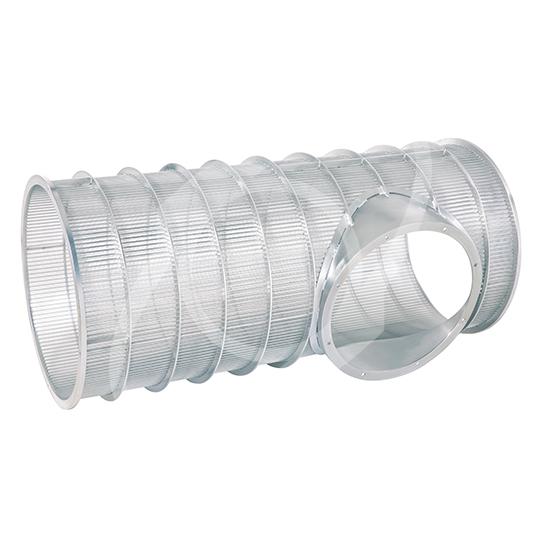
Case Study: Localized OEM Filter Element Replacement for Seawater Cooling Systems
Breaking Free from Premium OEM Pricing: How Slit and Hole Delivered a Seawater-Resistant Filtration Solution That Cut Costs by 25%
Strategic alloy selection tackles high-salinity challenges. By reverse-engineering imported OEM filter elements through precision localized manufacturing, we delivered uncompromised operating performance with superior cost efficiency.
A leading Taiwanese water treatment system integrator faced a critical challenge: replacing end-of-life filter elements in an offshore/petrochemical seawater cooling loop. The original equipment was supplied by a premier Western OEM. The end user demanded uncompromising operating reliability without the burden of steep OEM replacement costs.
Partnering with the client, Slit and Hole Industrial co-developed a corrosion-resistant filter element tailored for aggressive seawater environments. Through rigorous material testing, incoming quality control (IQC), and precision reverse-engineering to OEM specifications, the solution delivered an approximate 25% procurement savings, drastically slashed lead times, and eliminated spare-part supply chain vulnerabilities.
1. Executive Summary
| Project Scope | Key Details |
|---|---|
| Industry | Environmental & Water Treatment, Petrochemicals |
| Client Type | Tier-1 Water Treatment Equipment & Media Supplier (Taiwan) |
| End Application | Seawater recirculating cooling and reclamation system for a major petrochemical facility |
| Core Product | Corrosion-resistant industrial filter elements (OEM-compatible drop-in replacement) |
| Primary Challenges | Prohibitive OEM replacement costs, extended overseas lead times, severe high-chloride corrosion, and balancing quality against tight budgets |
| Technical Focus | Seawater-grade alloy selection, rigorous IQC material verification, high-precision form-fit-function re-engineering |
| Engagement Model | Joint development / Engineering co-design with water treatment integrator |
| Key Results | ~25% direct cost reduction, seamless operational continuity, and enhanced supply chain resilience |
2. Project Background: The Cost and Lead-Time Bottlenecks of Imported OEM Spares
In petrochemical seawater cooling systems, intake and recirculating filtration systems act as the primary defense line—blocking marine growth, sand, silt, and suspended particulates to safeguard downstream heat exchangers and piping from fouling and blockages.
In this case, the installed Western OEM filter elements had reached their end of service life and required full replacement. Traditionally, plant operators relied exclusively on the original equipment manufacturer: while quality is predictable, it comes with exorbitant price tags, months of lead time, and exposure to international shipping disruptions. Facing margin pressures, plant managers actively sought an alternative that reduced lifecycle costs without sacrificing filtration integrity.
For the water treatment solution provider, this created a critical dilemma:
- End-user expectations: Demanding "OEM-level performance at a substantially lower price point."
- Technical barrier to entry: Without proven expertise in seawater metallurgy and precision dimensional compatibility, they would remain locked into OEM dependency, eroding their margins and competitive edge.
To resolve this, the client partnered with Slit and Hole Industrial. The goal was not merely to produce a low-cost filter screen, but to deliver a fully validated, drop-in replacement engineered to thrive under sustained high-salinity exposure.
3. Technical Challenge: Why Seawater Recirculating Cooling Filtration Is Demanding
Seawater cooling environments are far more aggressive than conventional closed-loop industrial water systems. Filter elements face multiple concurrent failure mechanisms:
- High Salinity and Aggressive Chlorides: Standard austenitic stainless steels (such as SS304 or baseline SS316) quickly succumb to localized pitting and crevice corrosion, resulting in structural degradation, perforation, and bypass leakage.
- Biofouling & Suspended Solids: Marine organisms and silt buildup drive high differential pressures (ΔP), impairing flow rates and cooling efficiency.
- Continuous Operational Demands: Unplanned cooling system trips compromise process safety, risk thermal runaways, and trigger multimillion-dollar production shutdowns.
- Extended Replenishment Cycles: Protracted lead times for imported spares narrow scheduled maintenance windows, elevating the risk of downtime.
Success in this project was not about simply copying dimensions; it required rigorous metallurgical qualification and sub-millimeter dimensional fidelity to ensure seamless field fit and exact filtration micron ratings.
4. The Solution: Seawater-Grade Metallurgy + Precision OEM-Compatible Fabrication
Slit and Hole approached the challenge with a dual focus: superior metallurgy tailored for marine corrosion, backed by tightly managed supply chain execution.
1. Material-First Engineering
In high-chloride environments, superior structural craftsmanship cannot compensate for poor alloy selection. Slit and Hole proactively evaluated and qualified high-performance, marine-grade alloys from verified supply lines, enabling immediate project rollout without waiting for extended mill allocations.
2. Comprehensive Material Verification & Incoming Quality Control (IQC)
Every incoming batch underwent strict verification—cross-checking chemical composition (OES/PMI), microstructure, and mechanical properties. This eliminated the common industry risk of mismatched material certifications, providing the petrochemical client with fully auditable, verifiable quality assurance.
3. Precision Form-Fit-Function Drop-In Replacement
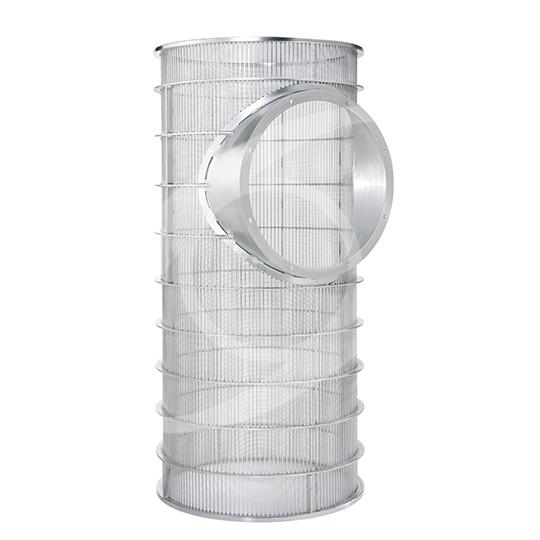
While basic screen fabrication is straightforward, achieving an exact dimensional fit within existing OEM housing tolerances is not. Slit and Hole reverse-engineered the assembly into an exact drop-in replacement, preserving original flow dynamics, differential pressure thresholds, and filtration efficiency. Localized manufacturing allowed immediate on-site pilot validation and drastically shortened the timeline from prototyping to field deployment.
Co-Development Synergy:
The water treatment integrator contributed deep field experience and application parameters, while Slit and Hole provided metallurgical engineering, screen manufacturing, and quality assurance. This close collaboration achieved the ideal balance: OEM-grade performance at localized production costs.
5. Cost-Benefit Analysis: Western OEM vs. Slit and Hole Localized Replacement
| Evaluation Metric | Western OEM Spares | Slit and Hole Engineered Alternative | Impact & ROI |
|---|---|---|---|
| Procurement Cost | High import markups and brand premium | Localized fabrication; optimized raw material & processing costs | ~25% direct cost savings |
| Corrosion Resistance | Reliable, but at a premium price | Tailored marine-grade alloys verified by IQC | Field-tested corrosion resistance and filtration efficiency on par with OEM |
| Lead Time & Agility | 16–24+ weeks; vulnerable to global freight delays | Agile local manufacturing; quick-turn dispatch | Drastically reduced downtime risk; shorter maintenance windows |
| Compatibility | Standard baseline fit | Precision-engineered form-fit-function replacement | 100% plug-and-play installation; zero retrofit needed |
| Supply Chain Security | Single-source dependency | Direct engineering partnership with local manufacturer | Unlocks a reliable secondary sourcing channel with sustained technical support |
6. Our Seawater Filtration & Re-engineering Capabilities
Depending on operational parameters and fluid characteristics, Slit and Hole provides full-spectrum engineering support:
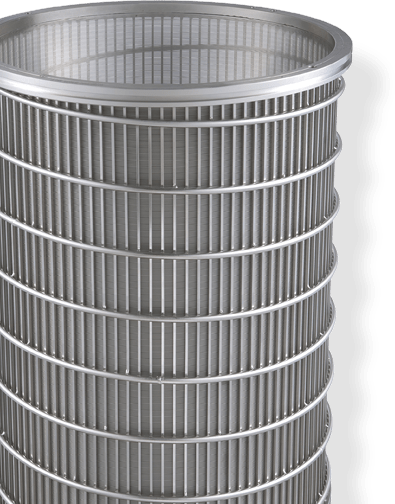
- Custom Re-engineering: Drop-in replacement filter baskets, cartridges, and wedge wire elements for seawater service.
- Advanced Metallurgy: Material selection optimized for high-chloride, brackish, and marine conditions (e.g., Duplex, Super Duplex, 904L, Nickel-based alloys, and specialized Austenitics).
- Dimensional Reverse-Engineering: Detailed field measurement, laser scanning, and OEM specification reproduction.
- Material Testing & QA: Positive Material Identification (PMI), chemical analysis, and mechanical integrity verification.
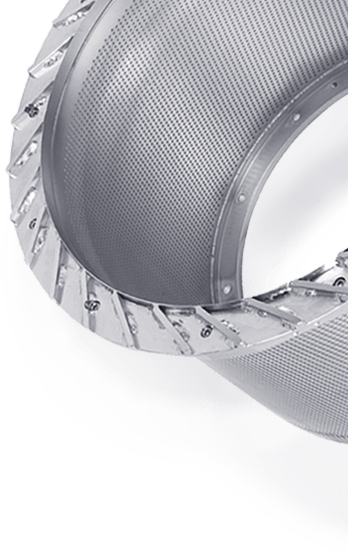
- Custom Slot / Mesh Precision: Tailored aperture sizes, micron ratings, and reinforced structural backing for high differential pressure applications.
- Localization & Dual-Sourcing: Establishing qualified local alternatives to mitigate foreign supply chain bottlenecks.
- Comprehensive Applications: Raw seawater intake, cooling tower loops, desalination pre-treatment, and effluent reclamation.
Note: Final alloy grade, slot/mesh opening, collapse pressure rating, and flange configurations are tailored to OEM drawings, water quality analyses, and operating envelope requirements.
7. Frequently Asked Questions (FAQ)
Q1: What does "filter element re-engineering/remanufacturing" entail in seawater cooling systems?
A: Rather than replacing the entire filtration vessel or paying inflated prices for imported proprietary consumables, we fabricate dimensionally and hydraulically identical replacement elements (form-fit-function). This keeps existing systems running at peak performance without capital-intensive infrastructure changes.
Q2: Why do standard stainless steels fail rapidly in seawater environments?
A: Stainless steel relies on an ultra-thin (a few nanometers) passive chromium oxide film to resist oxidation. However, the high concentration of chloride ions in seawater—having small ionic radii and high electronegativity—aggressively penetrates micro-defects in this passive layer, causing localized breakdown. This triggers severe pitting and crevice corrosion. Once the wire mesh is perforated, structural integrity collapses and bypass occurs. Overcoming this requires high-grade alloys featuring dense, self-healing passive films (high PREN values) and precision-controlled welding.
Q3: Does an alternative replacement element compromise service life?
A: Not when engineered properly. Our strategy is built on rigorous alloy qualification and mechanical verification before fabrication, followed by stringent fit checks and field trials. The objective of re-engineering is uncompromising operational reliability at a controlled cost and lead time—never cutting corners on metallurgy or structural integrity.
Q4: What level of cost reduction was achieved in this deployment?
A: The client achieved approximately 25% direct savings on filter element procurement compared to foreign OEM replacement quotes.
Q5: What target industries benefit most from this solution?
A: Seawater cooling systems, coastal petrochemical refineries, oil & gas platforms, power generation cooling circuits, desalination intake systems, and industrial water reclamation plants seeking domestic second-source alternatives.
Q6: What is the primary difference between Slit and Hole and foreign OEMs?
A: Western OEMs offer pre-configured off-the-shelf specs tied to rigid global logistics and premium price structures. Slit and Hole offers agile engineering collaboration, verified local sourcing, and accelerated delivery, delivering an OEM-equivalent solution with significant price and lead-time advantages.
8. About Slit and Hole Industrial
Slit and Hole Industrial is a specialized manufacturer of industrial wire mesh, wedge wire screens, and high-precision filtration elements. Our engineering solutions serve mission-critical sectors including civil water resources, environmental water treatment, petrochemical processing, semiconductor manufacturing, food & beverage, and pulp & paper. This case highlights our core strengths in severe-service metallurgy, quality-controlled fabrication, and precision re-engineering—positioning Slit and Hole as your trusted partner for localized industrial equipment upgrades.
9. Conclusion
Filter elements in seawater cooling systems are far more than simple consumables—a metallurgical mismatch risks catastrophic corrosion failure, while complete dependency on foreign OEMs exposes facilities to budget blowouts and critical supply disruptions.
This case demonstrates that operators do not have to choose between exorbitant OEM pricing and substandard generic replacements. By leveraging validated marine-grade alloys, disciplined incoming quality control, and precision OEM-compatible engineering, plant operators can maintain uncompromised reliability, slash procurement budgets by roughly 25%, and insulate their supply chains from global bottlenecks.
Facing excessive OEM replacement costs, long delivery lead times, or premature filter failures from corrosive water conditions?
Contact Slit and Hole Industrial to evaluate the feasibility of precision re-engineering for your filtration systems.
 +886-4-2682-2061
 Contact Us Now!