



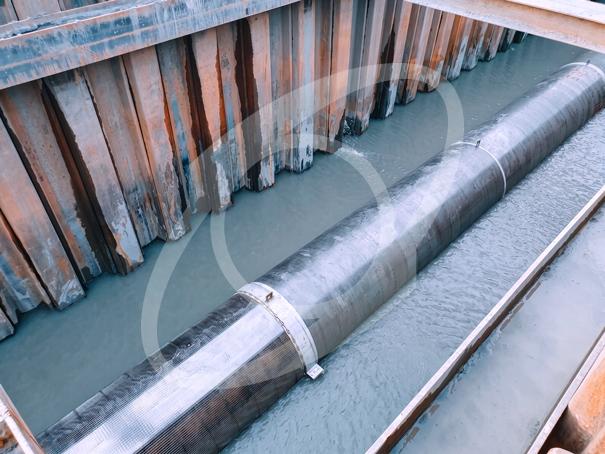
Overcoming limited domestic supply, prohibitive procurement costs, and tight municipal deadlines: Slit and Hole custom-manufactured 1.2-meter (1,200 mm) diameter infiltration collector pipes, cutting client costs by 15% while exceeding laboratory pressure resistance benchmarks.
Facing single-source dependency, premium pricing, and aggressive delivery schedules for extra-large diameter infiltration collector pipes, a tier-1 civil engineering firm partnered with Slit and Hole.
Through precision resistance welding process control, rigorous multi-stage laboratory compression and collapse testing, and agile reallocation of plant floor space, production capacity, and staging yards, Slit and Hole delivered the required volume on schedule. The project delivered a 15% procurement cost reduction, established superior structural performance over incumbent alternatives, and qualified a resilient, high-capacity domestic second-source manufacturer for major public water resource infrastructure.
1. Executive Summary
| Project Metric | Specification & Details |
|---|---|
| Industry | Municipal Water Resources, Civil Hydro-Engineering, Public Infrastructure |
| Client Profile | Tier-1 Water Resources Construction Contractor (Over 50 years of civil engineering history) |
| End Application | Riverbed infiltration / Subsurface hyporheic water intake scheme for a landmark southern Taiwan water development project |
| Core Product | Custom-engineered 1.2-meter (1,200 mm / 48-inch) large-diameter subsurface infiltration collector pipes |
| Primary Challenges | Severe domestic supplier scarcity for 1.2 m diameters, excessive procurement costs, compressed public works schedule, and immense fabrication/staging/transport bottlenecks |
| Technical Focus | Automated mesh spot-welding process control, radial collapse & external load resistance, multi-stage certified lab testing, batch consistency |
| Engagement Model | Turnkey contract manufacturing, rapid prototype validation, staged batch delivery aligned with civil construction milestones |
| Demonstrated Results | ~15% direct procurement cost savings, 100% on-time milestone delivery, superior collapse pressure ratings vs. incumbent options, and established a resilient domestic dual-sourcing channel |
2. Project Background: Strategic Water Challenges in Subsurface Intake Construction
In response to climate extremes and recurring regional droughts, tapping into subsurface riverbed infiltration water (hyporheic flow) has emerged as a cornerstone of Taiwan's strategic water resilience. Naturally pre-filtered through thick alluvial sand and gravel layers, infiltration water features low turbidity and consistent quality even during typhoons.
However, executing large-scale municipal infiltration collection requires massive, buried horizontal intake screens. For this flagship project in southern Taiwan, the project required specialized 1.2-meter (1,200 mm) diameter collector pipes buried deep beneath the riverbed.
The lead engineering contractor—a reputable firm with over five decades of heavy civil water project experience—faced severe supply chain vulnerabilities:
- Extreme Supplier Monopolization: Domestic manufacturers capable of producing 1.2-meter diameter collector screens with verified structural integrity are virtually non-existent, leaving contractors vulnerable to rigid pricing and single-source leverage.
- Aggressive Public Works Timelines: Municipal infrastructure contracts enforce strict phase-completion milestones tied to riverbed dry-season construction windows. Any supply delay risks heavy liquidated damages or flood-season washouts.
- Logistics & Staging Complexities: Fabricating, handling, and temporarily staging dozens of 1.2-meter structural pipe assemblies requires massive footprint allocations and specialized rigging equipment rarely available in standard mesh fabrication shops.
Seeking to diversify supply risk and control soaring procurement budgets without compromising engineering safety, the contractor turned to Slit and Hole.
3. Technical Primer: What Is an Infiltration Collector Pipe?
Subsurface infiltration water refers to the water flowing slowly through the permeable gravel and coarse sand strata beneath or adjacent to a riverbed. Because the riverbed acts as a massive natural slow-sand filter, this water is remarkably clear and free of suspended surface debris.
Infiltration collector pipes (intake screen laterals) are deployed horizontally or in radial configurations deep within the permeable gravel stratum:
- Selective Permeability: Precision screen apertures allow subsurface water to enter the intake lumen continuously while blocking sand, gravel, and sediment from intruding.
- Hydraulic Efficiency: Low entrance velocities minimize local head loss, prevent premature gravel packing, and inhibit screen blinding.
- Buried Structural Integrity: Positioned meters beneath the active riverbed, collector pipes must permanently withstand massive soil overburden, hydrostatic heads, dynamic riverbed scour, and live equipment loads during backfill operations.
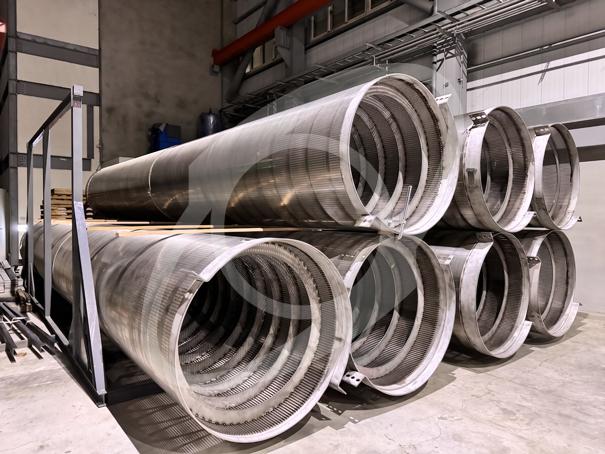
4. The Three Critical Manufacturing Hurdles of 1.2-Meter Large-Diameter Pipes
Scaling up screen diameter from standard utility sizes (e.g., 300 mm–600 mm) to 1.2 meters introduces non-linear structural and manufacturing challenges:
1. Structural Distortion and Radial Collapse Risks
At a 1.2-meter diameter, geometric hoop stress and vulnerability to ovality deformation increase exponentially. Under deep soil overburden, hydrostatic pressure, and gravel compaction, any microscopic weakness in wire tension or support geometry can trigger structural buckling or catastrophic radial collapse.
2. High-Density Weld Point Integrity Across Massive Surface Areas
A 1.2-meter collector pipe incorporates thousands of precision fusion/spot welds joining continuous profile wire to internal structural rib frames. A single cold weld, burn-through, or inconsistent weld nugget can cause localized structural unraveling under heavy gravel shifting, leading to screen rupture and sediment breakthrough.
3. Factory Footprint, Staging, and Material Flow Demands
A standard 1.2-meter pipe section occupies enormous volumetric space. Handling raw material coils, heavy structural frames, finished assemblies, and conducting batch staging without causing pipe ovality requires large heavy-overhead-crane workshops and expansive logistics yards that few domestic suppliers possess.
5. Slit and Hole's Large-Diameter Engineering Solution
Slit and Hole engineered a comprehensive solution addressing metallurgy, automated fabrication, certified validation, and agile supply chain logistics:
1. Custom Tooling & Optimized Resistance Spot-Welding
Slit and Hole reconfigured heavy-duty rotational jigs and automated welding heads specifically calibrated for 1.2-meter cylindrical geometry. By tightly controlling current density, electrode pressure, and weld duration, our engineers achieved 100% full-penetration weld nuggets across every support intersection, guaranteeing exceptional shear and tensile ratings.
2. Multi-Stage Laboratory Pressure & Collapse Testing
To provide unambiguous engineering validation, prototype and production samples were subjected to rigorous independent laboratory radial crush and collapse testing. Testing verified:
- Zero structural deformation or weld separation under maximum specified soil overburden loads.
- Exceptional resistance to cyclic hydraulic flow pressures and construction gravel impact.
- Dimensional ovality tolerances maintained within fractions of a percent, outperforming incumbent market products.
3. Dedicated Floor Allocation & Staged Just-In-Time (JIT) Delivery
Slit and Hole dedicated an entire manufacturing bay and dedicated open-yard storage to the project. Through flexible multi-shift labor scheduling, production throughput outpaced the client's aggressive installation milestones. Pipes were stored in designated, custom-cradled holding zones and dispatched in synchronized batches matching the contractor's riverbed excavation schedule—eliminating site congestion and damage risks.
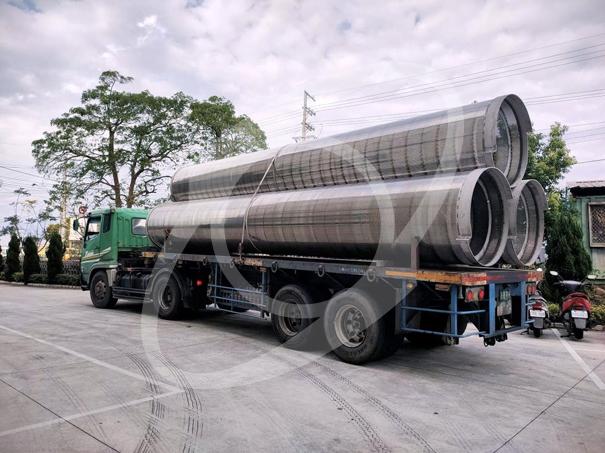
6. Project Outcomes: Triple Breakthrough in Cost, Quality, and Delivery
- Direct Procurement Savings of Approximately 15%: Localized fabrication and optimized direct-manufacturer engineering eliminated single-source monopolistic markups, significantly easing the contractor's project margin pressures.
- Exemplary Collapse Strength Exceeding Incumbent Benchmarks: Laboratory destructive and non-destructive load tests demonstrated superior structural resistance against radial buckling compared to existing market offerings.
- 100% On-Time Phase Delivery: Seamless supply synchronization ensured the civil contractor met all riverbed dry-season construction milestones without a single day of installation downtime.
- Zero On-Site Rejection or Ovality Defects: Precision jigs and engineered lifting cradles ensured that all 1.2-meter assemblies arrived perfectly round and ready for immediate flanged or welded installation.
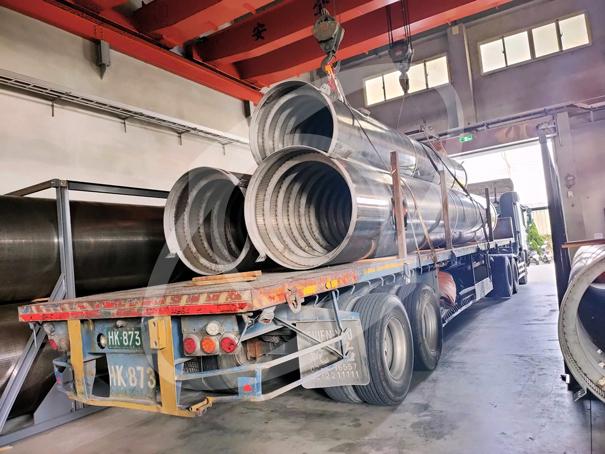
7. Strategic Decision Matrix: Incumbent Suppliers vs. Slit and Hole
| Evaluation Dimension | Incumbent Supply Options | Slit and Hole Engineered Solution | Value Delivered & Impact |
|---|---|---|---|
| Procurement Cost | Premium pricing driven by domestic single-source dominance | Competitive localized engineering with zero intermediary overhead | ~15% direct procurement cost reduction |
| Radial Collapse & Pressure Resistance | Meets baseline specifications | Heavy-duty welded structure; rigorously verified by independent lab testing | Superior structural safety margins under extreme riverbed overburden |
| Fabrication Agility & Capacity | Rigid production schedules; limited accommodation for rush orders | Multi-line flexibility with rapid cross-shift capacity dispatch | Protected riverbed dry-season civil excavation windows |
| Warehousing & Yard Capacity | Restricted footprint; requires immediate jobsite dispatch | Dedicated heavy-capacity indoor staging and outdoor yard logistics | Eliminated jobsite congestion and jobsite handling damage |
| Batch Delivery Logistics | Bulk drop-offs regardless of site readiness | Synchronized, phased shipments aligned with excavation progress | Just-In-Time integration with field civil teams |
| Engineering & Field Support | Remote or standard off-the-shelf catalog response | Dedicated on-site application engineers and rapid technical coordination | Rapid resolution of interface tolerances and field welding details |
8. The Strategic Imperative of Establishing a Secondary Domestic Supplier
For critical municipal infrastructure, relying on a single supplier for large-diameter collector pipes introduces acute supply chain vulnerability. This milestone project established Slit and Hole as a proven, fully qualified domestic second-source supplier, unlocking vital strategic advantages:
- Mitigating Single-Source Hold-Up: Re-establishes healthy competitive market dynamics, protecting public procurement budgets from unjustified monopolistic markups.
- Supply Chain Redundancy: Insulates strategic national water infrastructure from unexpected supplier production halts, machine breakdowns, or labor shortages.
- Agile Engineering Customization: Unlike rigid catalog vendors, Slit and Hole partners directly with civil engineers to tailor wire geometries, open areas, and reinforcement rings to specific riverbed geological profiles.
9. Slit and Hole's Large-Diameter Collector Pipe Engineering Capabilities
Depending on hydro-geological conditions, aquifer depth, and soil mechanical properties, Slit and Hole provides turnkey fabrication and technical support across:
- Large-diameter infiltration water collector pipes (Diameters up to 1,200 mm / 1.5 m+)
- Radial collector well lateral screens (Ranney well screen laterals)
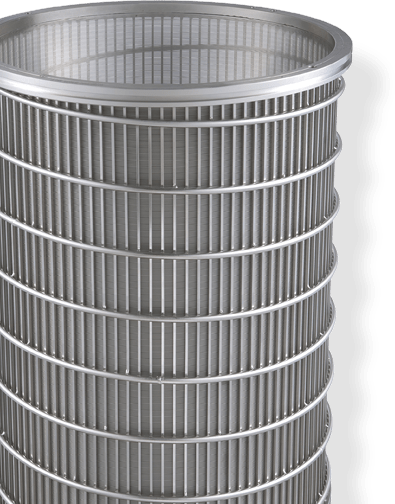
- Heavy-duty continuous-slot wedge wire screens and wound mesh pipes
- Custom structural mesh geometries, aperture ratings, and longitudinal rib configurations
- Heavy-load resistance spot welding and fusion welding quality assurance
- Certified third-party hydrostatic, collapse, and radial compressive strength testing
- Large-scale factory buffer staging, structural cradle packing, and synchronized jobsite logistics
- Full technical qualification support for public infrastructure dual-sourcing evaluations
Note: Dimensional tolerances, slot apertures, collapse pressure ratings, and flange/weld-ring interfaces are custom-tailored to site-specific borehole logs, hydraulic intake parameters, and engineering drawings.
10. Frequently Asked Questions (FAQ)
Q1: What exactly is subsurface infiltration water (hyporheic water)?
A: Infiltration water refers to shallow groundwater flowing through the highly permeable sand and gravel layers beneath or immediately adjacent to a riverbed. Because it undergoes natural filtration through deep riverbed alluvium, it exhibits low turbidity, consistent temperature, and low pathogen counts, making it a premier, climate-resilient raw water resource.
Q2: What is the primary operational role of an infiltration collector pipe?
A: The collector pipe serves as the underground intake screen. It allows clean subsurface water to enter the collection lumen with minimal hydraulic resistance while physically barring sand, silt, and gravel from entering, preventing downstream pump wear and sediment accumulation.
Q3: Why are large diameters (such as 1.2 meters) required for these civil projects?
A: Subsurface water intake relies on gravity collection and low entrance flow velocities to prevent fine sand migration (piping effect). A 1.2-meter diameter provides a massive effective open intake area, allowing high-volume raw water extraction (tens of thousands of tons per day) while maintaining low local entrance velocities that protect the natural aquifer structure.
Q4: Why is structural pressure and collapse testing essential for 1.2-meter pipes?
A: Large-diameter pipes buried meters beneath riverbeds are exposed to immense downward soil overburden, hydraulic hydrostatic pressure, dynamic river scour, and heavy construction equipment compaction. Laboratory radial crush tests confirm that the pipe will not buckle, lose roundness, or suffer weld fatigue over its multi-decade design life.
Q5: How does Slit and Hole guarantee consistent quality across mass-produced large pipes?
A: We enforce end-to-end quality control: raw material chemical composition and mechanical verification (IQC), automated continuous welding parameters (current, pressure, and cycle time monitoring), dimensional laser inspection for roundness and straightness, and destructive/non-destructive load testing on pilot units.
Q6: How was the 15% cost reduction achieved without sacrificing engineering quality?
A: Savings were driven by localized manufacturing efficiencies, optimized tooling, streamlined raw material sourcing, and direct manufacturer engagement—eliminating agent margins and supply monopolization while exceeding technical performance specifications.
Q7: Can Slit and Hole accommodate custom aperture dimensions and connection interfaces?
A: Yes. We custom-engineer slot widths (apertures), profile wire shapes, internal structural rib configurations, and end connections (flanged, beveled weld rings, or threaded couplings) to match specific civil drawings and aquifer particle-size distribution curves.
Q8: What criteria should civil contractors prioritize when evaluating large-diameter screen suppliers?
A: Contractors should evaluate eight foundational criteria:
- Dimensional tolerance control and ovality prevention.
- Verified structural weld-joint shear strength.
- Independent certified laboratory collapse pressure test data.
- Large-footprint indoor and outdoor buffer storage capability.
- Production scheduling agility to meet strict civil construction windows.
- Proven handling and rigging procedures for oversized cargo.
- Total cost transparency.
- Localized engineering support for rapid jobsite response.
11. About Slit and Hole
Slit and Hole is a specialized precision manufacturer of heavy-duty industrial screens, wedge wire systems, and customized filtration elements. Serving mission-critical infrastructure projects across municipal water management, civil hydro-engineering, coastal power generation, petrochemicals, semiconductors, and heavy industrial processing, Slit and Hole combines advanced metallurgical craftsmanship with large-scale manufacturing capacity. We are dedicated to providing resilient, high-performance localized solutions that fortify critical supply chains.
12. Conclusion & Recommendations
Procuring 1.2-meter large-diameter infiltration collector pipes for major civil water projects does not require settling for single-source monopolistic pricing or extended lead-time anxieties.
This landmark deployment confirms that through rigorous metallurgical control, automated resistance spot welding, certified laboratory pressure testing, and expansive plant capacity, Slit and Hole provides a fully validated, highly competitive domestic solution. Our engineering team delivered complete dimensional precision, superior structural collapse resistance, 100% on-time milestone execution, and a direct 15% procurement budget reduction.
Planning an upcoming subsurface water intake, riverbed infiltration gallery, or large-diameter civil screening project?
Contact the Slit and Hole engineering team to review technical specifications and evaluate custom-manufactured solutions
 +886-4-2682-2061
 Contact Us Now!